How to sell your car online (and get the most for it)
Online Trade-Ins team9 min readUpdated
Short answer
Get more than one real number before you commit. Instant offers from Carvana, CarMax or KBB are the fastest but come from a single buyer. A private sale can pay the most but takes weeks. A dealer auction puts several licensed dealers on your car in two hours. Whichever you pick, describe the car exactly.
In this guide
Key points
- There are four ways to sell online: instant offer, private sale, trade-in and dealer auction. They pay differently for the same car.
- The price depends most on how many qualified buyers compete at the moment it's set.
- Describe the car exactly. Every buyer checks it at handover.
- Get at least two real numbers before you commit to one.
See what dealers will pay
Free to list. Licensed local dealers bid for two hours, and you pay only if one buys your car.
List your carHow the auction worksYou can sell a car online in an afternoon now. The hard part isn't the paperwork or the photos. It's knowing which kind of buyer you're dealing with, because that decides who sets the price and how much room there is to push it up.
There are four ways to sell your car online in 2026: an instant offer from a company that buys cars, a private sale through a listing site, a trade-in quote from a dealership, or an online auction where dealers bid against each other. Each one pays differently for the same car. This guide walks through all four, the prep that moves your number before anyone sees the car, and the steps from listing to handing over the keys.
The four ways to sell your car online
Every option comes down to one question: how many buyers are competing for your car at the moment the price is set?
| Option | Who sets the price | How fast | What it costs you |
|---|---|---|---|
| Instant offer (Carvana, CarMax, KBB Instant Cash Offer, Peddle) | One company's pricing model | Minutes for an offer, days to hand over | Nothing upfront; the margin is built into the offer |
| Private sale (Craigslist, Facebook Marketplace, Autotrader) | You ask, buyers negotiate down | Days to weeks | Listing fees on some sites, your time, meeting strangers |
| Dealer trade-in | The one dealer you're buying from | Same day | Nothing upfront; often blended into a new-car deal |
| Dealer auction (Online Trade-Ins) | Licensed dealers bidding against each other | A 2-hour auction, then one drop-off | $250 or 1% of the winning bid, only if a dealer buys |
Instant offers
You enter your VIN or plate, mileage and condition, and a company that buys cars quotes a price on the spot. Carvana, CarMax and Kelley Blue Book's Instant Cash Offer all hold their offers for 7 days. The number is firm only if the car matches what you described: each of them inspects the car at handover and can lower the offer if it doesn't.
Instant offers are the fastest, least effortful way to sell. The trade-off is that there's exactly one buyer, and that buyer makes money when the price is low. The offer has to leave room for reconditioning, transport, the company's margin, and the risk that the car is worse than described.
Private sale
Selling to another driver usually gets the highest price, because you skip the business in the middle. It also takes the most work: photos, a listing, answering messages, test drives with strangers, and handling payment and paperwork yourself. Expect lowball messages, no-shows, and payment scams that target sellers (fake cashier's checks and "overpayment" requests are the classic ones).
Dealer trade-in
If you're buying your next car from a dealer, you can trade the old one in as part of the deal. It's convenient, but the trade-in number is often hard to read because it's negotiated alongside the new car's price, financing and add-ons. A generous-looking trade-in can be offset somewhere else in the contract. Our guide to trade-in value covers how that number is set.
Dealer auction
A dealer auction flips the instant-offer model. Instead of one company quoting you, you list the car once and licensed dealers bid against each other. On Online Trade-Ins, the auction runs for two hours, you watch every bid arrive live, and you set a reserve, the lowest price you'd take. Dealers do this because they need inventory and buying from a private seller can cost them less than wholesale auctions, so the bidding is a real contest rather than a single quote.
What decides how much you get
Whichever route you choose, the same handful of things move the price. A few of them you can change in an evening.
- Mileage and age. The two biggest inputs, and the ones you can't change. Be exact: buyers check the odometer at handover.
- Condition. Dents, curb-rashed wheels, worn tires, warning lights and smells all come off the price. Disclose them up front; a buyer who finds them at inspection lowers the offer anyway and trusts the rest of your listing less.
- History. Accidents, title brands (salvage, rebuilt, lemon buyback) and the number of owners show up on vehicle history reports, and every serious buyer reads one.
- Service records. A folder or a dealer printout of oil changes and major services is proof the car was looked after.
- Local demand. Trucks, hybrids and certain SUVs sell faster in some regions than others. Buyers near you know your market better than a national pricing model.
- Competition. The more qualified buyers looking at the same car at the same time, the closer the price gets to what the car is really worth to them.
Get your car ready to sell
Ten minutes of prep is usually worth more than an hour of negotiating.
- Find your title and payoff. Locate the title (in California, the "pink slip"). If you still owe money on the car, get the lender's 10-day payoff amount. A loan is fine; dealers pay off lenders every day.
- Pull a history report. Know what buyers will see before they see it.
- Clean it inside and out. A wash, a vacuum, and clearing out personal items changes how the car photographs and how it reads in person.
- Gather records and spare keys. A second key fob alone is worth real money to a dealer.
- Fix the cheap things. A burned-out bulb or a missing hubcap costs little to fix and makes a buyer wonder what else is wrong.
- Don't over-invest. Big repairs rarely pay back their cost at sale. Disclose them instead.
Take photos that sell
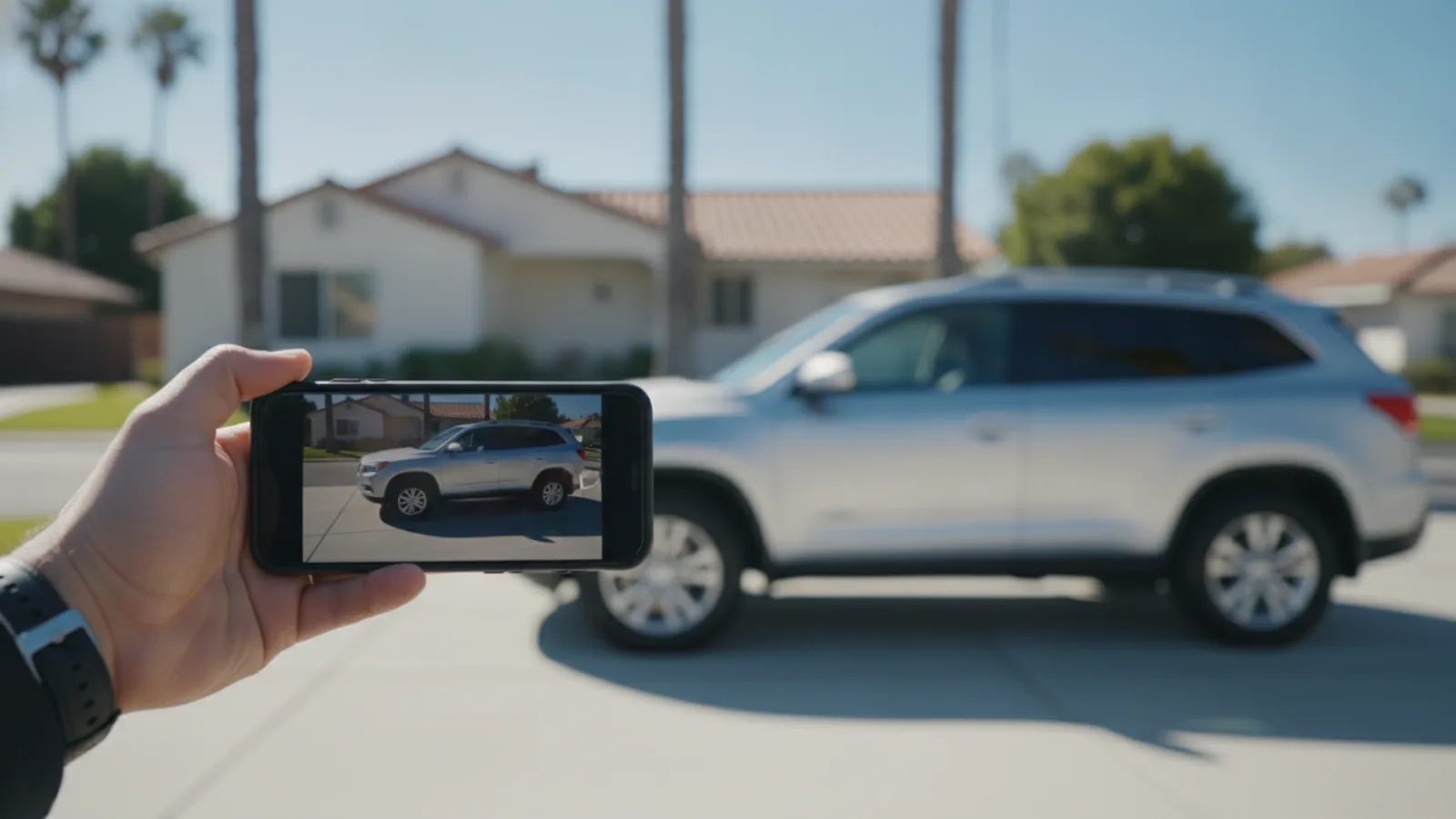
Online buyers decide from photos. Shoot in daylight, in an open space, with the car clean.
- Front three-quarter, rear three-quarter, both sides, front and back.
- The dashboard with the car on, showing mileage and any warning lights.
- Front seats, back seats, cargo area, and each wheel and tire.
- Close-ups of any damage. Hiding it only moves the conversation to the inspection.
On Online Trade-Ins, the listing wizard on your phone walks you through each angle with an outline of your car type on the camera screen, so the set comes out complete.
How to price your car
A price you can defend starts with real numbers, not hopes.
- Get a range. Online estimators such as Kelley Blue Book give trade-in and private party ranges. Choose the condition honestly; most sellers rate their car one grade too high.
- Check live listings. Search for the same year, model, trim and similar mileage within driving distance. Asking prices aren't selling prices, but they show what you're up against.
- Get at least one firm offer. An instant offer is a real floor: a number someone will pay this week.
- Decide your walk-away price. That's the number below which you'd rather keep the car or try another route. On a dealer auction, that's your reserve.
If you're selling privately, price a little above your walk-away so there's room to negotiate. In an auction, the bidding sets the price, so the reserve is the only number you choose.
Common mistakes when selling a car online
- Describing the car better than it is. Every option checks the car at handover. An optimistic description just moves the price cut to the end, when you have the least leverage.
- Taking the first offer. Offers for the same car can vary widely between buyers. Get at least two before you decide.
- Forgetting the loan. Know your payoff before you list, so you know what you'll actually take home.
- Releasing the car before payment clears. In a private sale, a check that bounces after the car is gone is very hard to undo.
- Skipping the release of liability. Until it's filed, tickets, tolls and even accidents can trace back to you.
- Leaving personal data behind. Unpair your phone, sign out of the car's apps, clear saved addresses and remove garage remotes and toll tags.
Step by step: from listing to payment
Here's how the dealer auction route works from start to finish. The other routes share most of these steps.
- List the car. Enter the VIN (or year, make and model), mileage, and answer a short condition questionnaire. Add at least six photos.
- Set a reserve. The reserve is the lowest price you'd take. If the top bid meets it, the car is sold. Set it honestly; it's a commitment, not a starting point.
- Watch the auction. For two hours, licensed dealers within driving distance bid against each other. A bid in the last minute adds time back to the clock, so nobody wins by sniping.
- Decide. Reserve met? It's sold. Under your reserve, or no reserve? You have 24 hours to accept the top bid or walk away.
- Meet the dealer. Once you accept, you and the winning dealer get each other's contact details and you book a drop-off time from their calendar.
- Hand over the car. The dealer inspects the car against your listing, pays you, and handles the lender if there's a loan. You pay the seller fee only when the dealer buys.
Paperwork and payment
The details vary by state, but a sale nearly always needs:
- The title, signed over to the buyer (or the lender's payoff process if the bank holds it).
- A bill of sale with the price, date, VIN and both parties' details.
- An odometer disclosure, often part of the title itself.
- A release of liability filed with your state's DMV so later tickets and tolls aren't yours. In California, that's the Notice of Transfer and Release of Liability, due within 5 days of the sale.
Sell to a business (an instant-offer company or a dealer) and they handle most of the forms for you. Sell privately and they're yours to get right. For payment, a business pays you directly. In a private sale, meet at your bank, and never release the car or the title until the money has actually cleared.
Which way to sell is right for you
- You want it gone today and don't mind leaving money behind: take an instant offer. Get two or three and take the best one.
- You want the top price and have the time and patience: sell privately.
- You're buying your next car from a dealer and value one-stop convenience: trade it in, but get an outside offer first so you know what the trade-in is worth.
- You want buyers competing for it without meeting strangers: run a dealer auction. You see the real market price in two hours and decide whether to sell.
There's nothing to lose by getting more than one number. An instant offer is free, a dealer auction on Online Trade-Ins is free to list, and both tell you what the market will pay before you commit.
Frequently asked questions
Is it safe to sell my car online?
Yes, if you sell to an established business or verified buyers. The risky part of selling online is the private sale: meeting strangers and accepting payment you can't verify. On Online Trade-Ins, every bidder is a licensed dealer whose license we check, and your name, phone and email are shown only to the winning dealer after you accept.
Can I sell my car online if I still owe money on it?
Yes. You'll need your lender's payoff amount. A dealer or an instant-offer company pays the lender directly, and if the price is more than the payoff, you get the difference. If you owe more than the car is worth, you'll need to cover the gap.
How fast can I sell my car online?
An instant offer arrives in minutes and the handover usually takes a few days to schedule. A dealer auction on Online Trade-Ins runs for two hours, and you book the drop-off with the winning dealer right after. A private sale can take days or weeks.
What's the best way to sell a car for the most money?
Get several qualified buyers to compete at the same time. A private sale can do that if you have the time to manage it. A dealer auction does it in two hours, with licensed dealers instead of strangers.
Do I need to fix my car before selling it?
Usually not. Fix cheap, obvious things like bulbs and wipers, clean the car, and disclose anything bigger. Major repairs rarely add as much to the price as they cost.
About Online Trade-Ins
We run a marketplace where licensed dealers bid on your car in a two-hour live auction, in Los Angeles, Phoenix, Las Vegas, Atlanta and Houston. We don't buy cars and we never set your price. Competitor details in our guides come from each company's own published terms; check them before you decide.